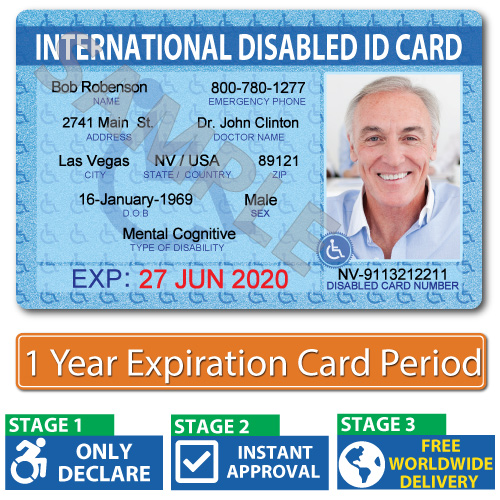
A disabled ID card is an official document. It confirms a person’s eligibility for services and accommodations.
This card proves you have a disability. It lets you get specific benefits. For instance, in Canada, the CNIB card offers discounts on transit and event tickets, plus tax benefits.
Having formal proof of your disability is key. It helps you get the concessions and services you deserve. It’s the first step to getting support.
This guide will cover who’s eligible, what you need to apply, and how to get your card.
Understanding the Disabled ID Card
Living with a disability can be tough, but a disabled ID card helps a lot. It’s more than just a card; it’s a key to support and access. This section will cover what these cards are, their benefits, and the different types available.
What is a Disabled ID Card?
A handicapped ID card proves you have a disability. It’s accepted by businesses and government agencies. It’s different from a driver’s license or state ID.
The CNIB card is a special ID for people with vision loss. It shows you have legal blindness or significant vision loss. This helps you get the help you need.
Benefits of Holding a Disabled ID Card
Having a valid disabled ID card brings many benefits. It gives you access to services and privileges that help you feel included.
With a handicapped ID card, you can get discounts on transit. You also get priority access and special seating in public places. You might even get financial help to enjoy cultural and entertainment events.
For example, a handicapped ID card can get you a CNIB card. This card offers free or discounted transit and event tickets. It’s a way to get everyday advantages.
Types of Disabled ID Cards Available
There are different disabled ID cards, and the right one depends on your needs. Knowing the options can help you get the best card for you.
1. Basic Disability ID Cards: These are common and issued by governments or disability organizations. They have your photo and name. They help you get general benefits.
2. Transportation-Specific Cards: Some cards are just for transit. The Vancouver Combo Card is one example. It’s a transit pass and proof of disability for lower fares.
3. Organization-Specific Cards: Non-profits like the CNIB issue their own cards. While not government IDs, they’re widely accepted in Canada. They prove your sight loss for services and discounts.
Choosing the right card depends on your needs. For transit discounts, get a transportation-specific card. For broader recognition, choose a general ID from a recognized organization.
Eligibility Criteria for a Disabled ID Card
Before you apply for a disabled ID card, you need to know the rules. These rules help make sure the card goes to those who really need it. Meeting these rules is the first step to get the card’s benefits and help.
Who Qualifies for a Disabled ID Card?
To get a disabled person identification card, you need medical proof of a disability. Each program has its own rules. For example, the Canadian National Institute for the Blind (CNIB) requires a visual acuity of 20/200 or less in the better eye with correction.
Other programs use similar rules. You need a doctor’s diagnosis to qualify. This diagnosis must show a physical, sensory, mental, or developmental issue that limits your daily activities.
Different places have different rules. Some focus on visual, hearing, or mobility issues. Others look at how the condition affects your daily life. Always check your state’s specific rules.
Documentation Needed for Application
Applying for a special needs id needs specific documents. You must show who you are and your disability. Getting your paperwork ready is important.
You’ll need a government-issued photo ID. This could be a driver’s license, state ID, or passport. It proves your identity and where you live.
Medical documents are key. A doctor’s statement or medical records must confirm your disability. They should explain your disability and how it affects you. Some programs need a specific form from your doctor.
For a disabled person identification card, you might also need to show where you live. A utility bill or lease agreement in your name is usually enough. Having all your documents ready makes the application smoother.
Age and Residency Requirements
Most programs have rules about age and where you live. You must live in the state where you’re applying. You’ll need to show proof of residency, like a utility bill or lease agreement.
Age rules vary. Most programs require you to be at least 18. For minors, a parent or legal guardian must apply. They need to show their ID and proof of guardianship.
Some programs have no age limit, while others are for specific age groups. For example, some benefits are only for adults over 18. Always check the age rules for the program you’re applying to.
Residency is a big requirement. You must prove you live in the state or area issuing the card. This is usually done with a recent utility bill, lease, or state ID card. These rules make sure the benefits go to local residents.
In summary, getting a disabled ID card requires medical proof, the right documents, and meeting age and residency rules. Having everything ready makes the application process easier.
Steps to Apply for a Disabled ID Card
Getting a disabled ID card is a step-by-step process. It checks if you’re eligible and gives you access to important services. This guide will help you apply, avoid delays, and understand how to renew your card.
How to Complete the Application Process
The application has several stages. First, you need a doctor’s confirmation of your disability. This is a detailed report from a certified professional.
Then, you fill out a formal application to the assessment body, like the CNIB. They review your documents to see if you qualify. If you do, they’ll send your ID card to you.
Common Mistakes to Avoid
Some mistakes can slow down your application. The biggest one is not filling out the form fully or not providing enough medical proof. Make sure to complete every section clearly.
Don’t use a CNIB card as your ID. It’s not a government-issued photo ID.
Renewal Procedures and Key Points
Most ID cards expire after a few years, like five or ten. Start the renewal early to keep your benefits. You’ll need to update your information, so have your documents ready.
Remember, a handicap ID is for accessibility, not as a government ID.